Configuring a Cold Transfer Block
When building a script in SAS Flex, there are several options to choose from when deciding how to close out your script. In this article we'll show you how to configure a Cold Transfer script block.
Use this block to have agents transfer callers to a number on your side. There is no interaction between the CSR and the contact person. The caller’s information may or may not be gathered prior to the transfer. You can choose to transfer to a Profile number, transfer according to a cold transfer schedule, or manually type in a number to transfer calls to within the block itself.
In this article we'll discuss:
Tips Before Getting Started
Before making updates to your live script, it's a good idea to make a copy of your script to make the desired updates. Then, once the updates are completed, you can make the copied script live. This will ensure there are no issues with calls that agents are actively handling.
1
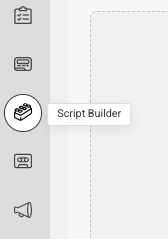
Select the Script Builder icon on the left-hand navigation menu.
2
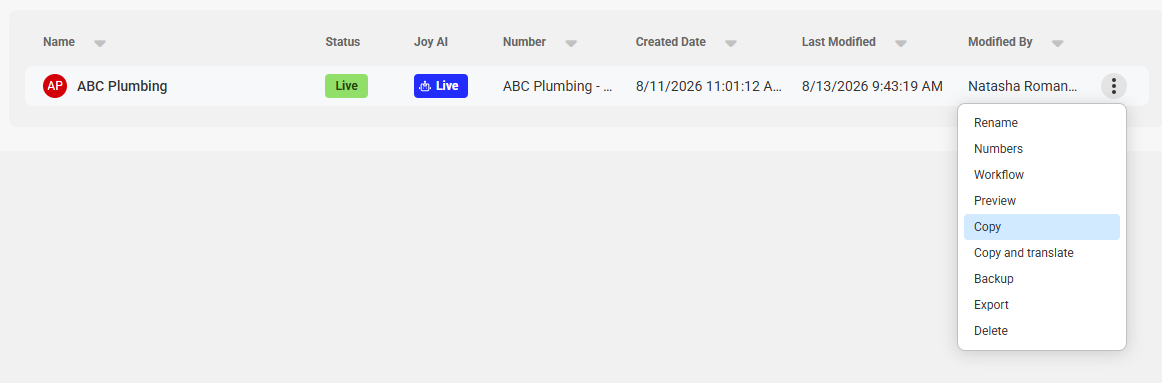
Click the 3-dot menu icon next to the script you wish to update, and select Copy.
3
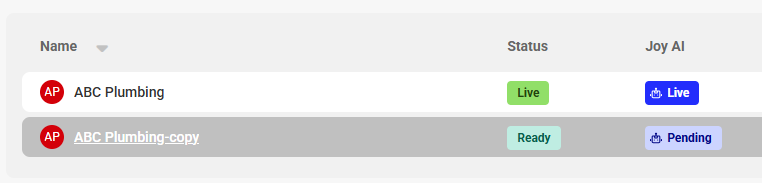
Next, select the script labeled Copy to begin editing.
All-Day Closings
All-day closings will display the same closing text to agents no matter what day or time a customer calls in.
1
Select the Script Builder icon on the left-hand navigation menu.
2
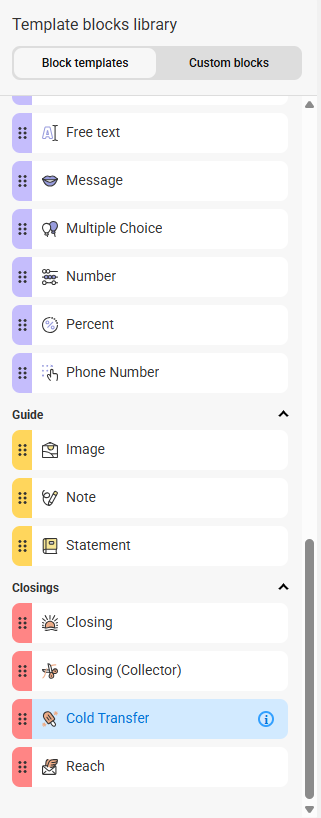
On the next page, click the Blocks tab, then select Add new block. From the Blocks list under Block Templates, locate and select the Cold Transfer block.

3
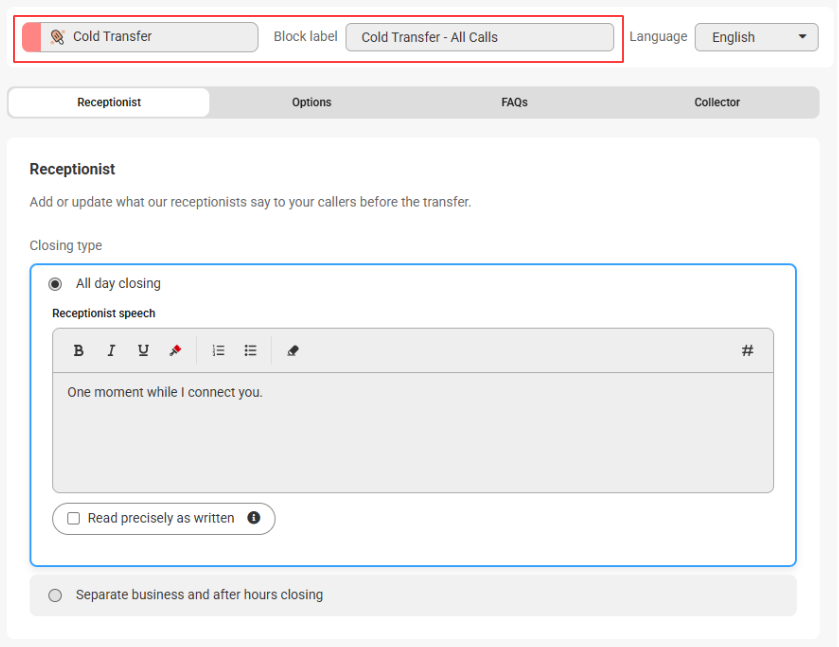
Once the block populates on your screen, you'll see the Block Type along the top of the block, and a space to add a Block Label next to it. Block Labels will help us identify the block within the system later on. We named ours Cold Transfer - All Calls.
4
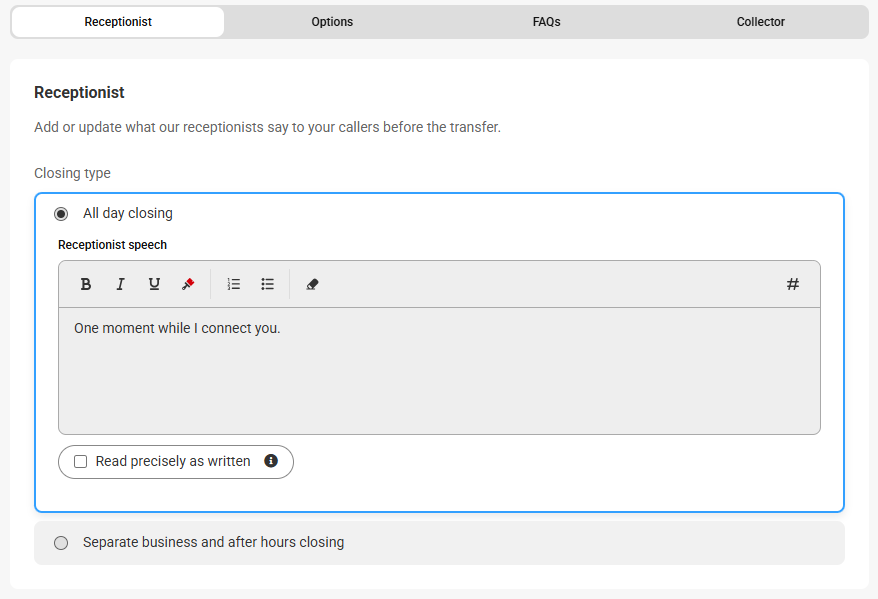
Under the Receptionist tab, we'll be using the All day closing option since we want the agents to use the same closing verbiage 24/7. If this option is chosen, standard text is pre-filled in the Operator Text. Feel free to customize this accordingly.
5
Under the Options tab, assign a Call Result to your Closing Block by choosing an Outcome. Then choose the Profile(s) you want messages to be sent to. You can select up to 10 Profiles per Closing Block.
If you need more than 10 members to receive notifications, you can create Profile Groups which would allow you to send notifications to up to 50 members, since each Profile allows you to add up to 5 emails and/or numbers.
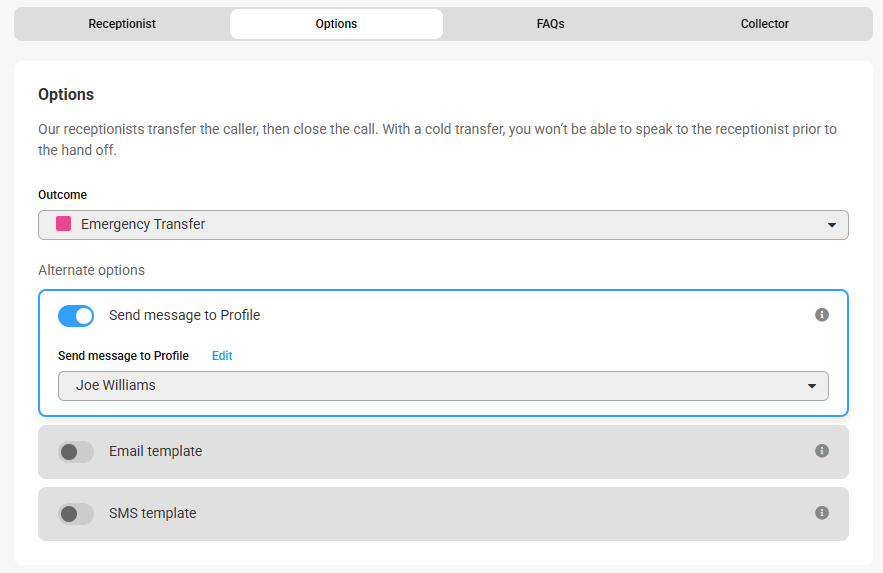
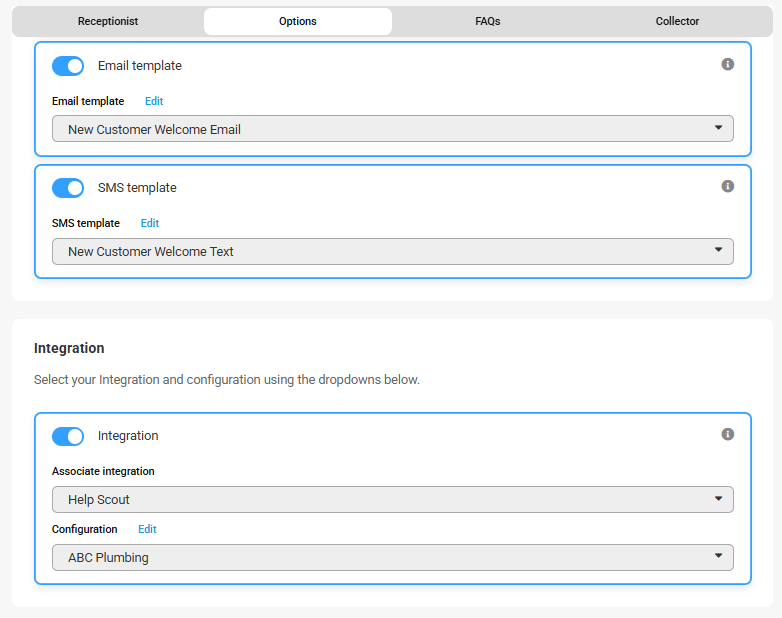
If you are utilizing the SAS Email App, the SAS SMS App, or one of our available App Integrations, toggle the appropriate option, then choose your respective template and/or configuration from the drop down.
6
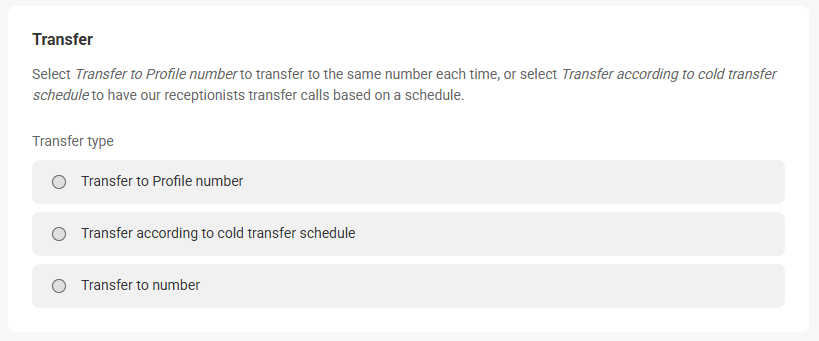
Next, choose your Transfer option based on the choices below:
- Transfer to Profile number: If you select this option, you will also need to select the Profile in which you want the call to be transferred, as well as the number to transfer to. If you haven’t already, check out this article on how to edit a Profile.
- Transfer according to Cold Transfer schedule: If you select this option, you will also need to select the on-call schedule you want to use. If you haven’t already, check out this article for instructions on how to set up an on-call schedule.
- Transfer to number: If you select this option, you'll need to manually type in the number you want us to transfer to.
With a Cold Transfer, we cannot transfer to any number with an extension.
7
When you are finished, click Save. Once the block has been saved, it can be found under the Custom Blocks section of the Block Builder.
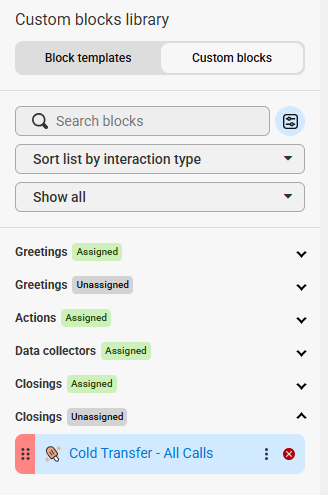
Once your Block has been created, you'll need to incorporate it into a Script Section. For more information on Script Sections, check out this article.
Business and After-Hours Closings
Business and after-hours closings will display different closing text to agents depending on what day or time a customer calls in.
1
Select the Script Builder icon on the left-hand navigation menu.
2
On the next page, click the Blocks tab, then select Add new block. From the Blocks list under Block Templates, locate and select the Cold Transfer block.
3
Once the block populates on your screen, you'll see the Block Type along the top of the block, and a space to add a Block Label next to it. Block Labels will help us identify the block within the system later on. We named ours Cold Transfer - All Calls.
4
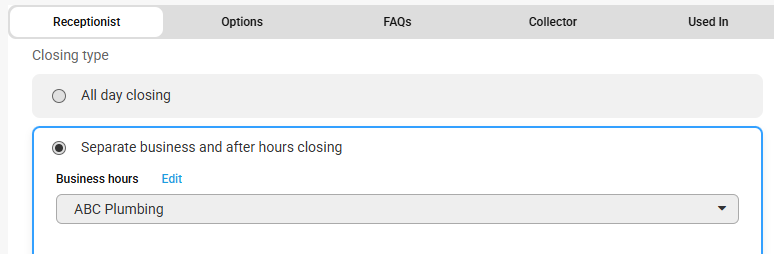
Now under the Receptionist tab, select the Separate business and after hours closing option. Then choose your Business Hours set from the drop down.
5
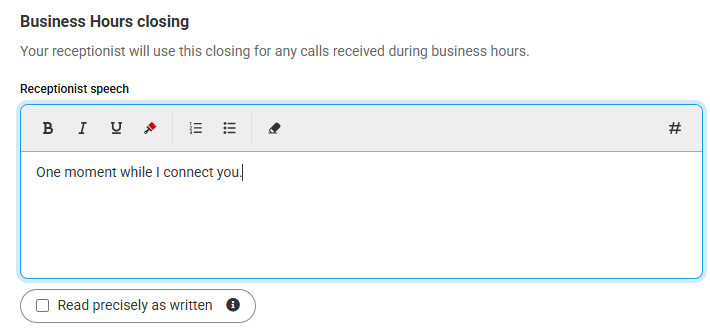
Next, fill in the operator text under the Business Hours closing section. In our example, we'll be letting the caller know that we'll try to connect them.
6
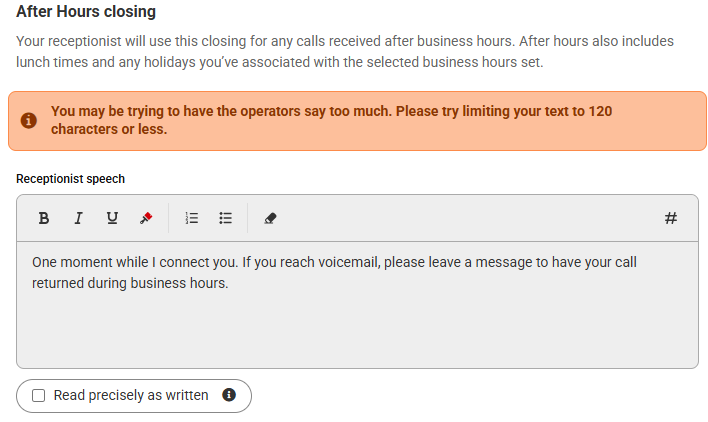
In the After Hours closing section, we'll add similar text, but we'll also include language letting the caller know to leave a message if they reach voicemail and that their call will be returned when the office re-opens.
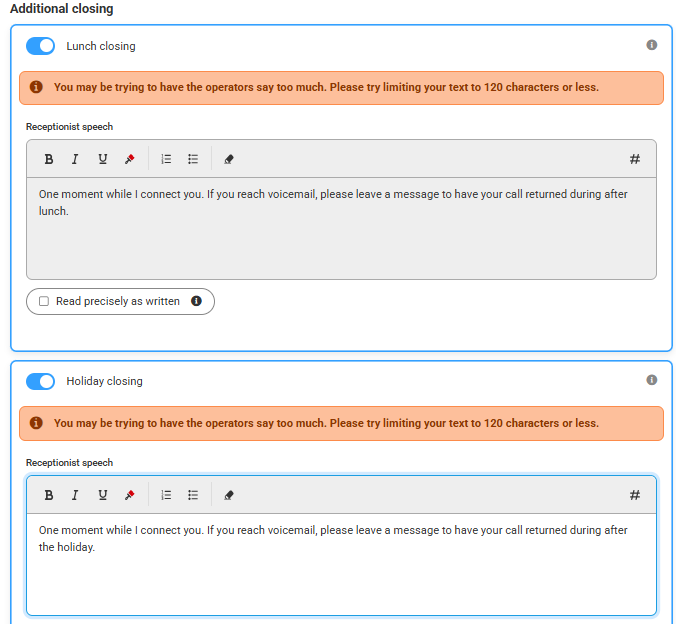
If you want the agents to say something different to callers when your office is closed for a holiday or during lunch, you can activate the Lunch closing and/or the Holiday closing and type in your respective text, as shown below.
7
Under the Options tab, assign a Call Result to your Closing Block by choosing an Outcome. Then choose the Profile(s) you want messages to be sent to. You can select up to 10 Profiles per Closing Block.
If you need more than 10 members to receive notifications, you can create Profile Groups which would allow you to send notifications to up to 50 members, since each Profile allows you to add up to 5 emails and/or numbers.
If you are utilizing the SAS Email App, the SAS SMS App, or one of our available App Integrations, toggle the appropriate option, then choose your respective template and/or configuration from the drop down.
8
Next, choose your Transfer option based on the choices below
- Transfer to Profile number: If you select this option, you will also need to select the Profile in which you want the call to be transferred, as well as the number to transfer to. If you haven’t already, check out this article on how to edit a Profile.
- Transfer according to Cold Transfer schedule: If you select this option, you will also need to select the on-call schedule you want to use. If you haven’t already, check out this article for instructions on how to set up an on-call schedule.
- Transfer to number: If you select this option, you'll need to manually type in the number you want us to transfer to.
With a Cold Transfer, we cannot transfer to any number with an extension.
9
When you are finished, click Save. Once the block has been saved, it can be found under the Custom Blocks section of the Block Builder.
Once your Block has been created, you'll need to incorporate it into a Script Section. For more information on Script Sections, check out this article.
Next Steps
If you chose to make a copy of your script before making changes, we'll show you how to re-assign your SAS number to the new script and delete the original. If you didn't make a copy of your script before making updates, you can disregard this section.
1
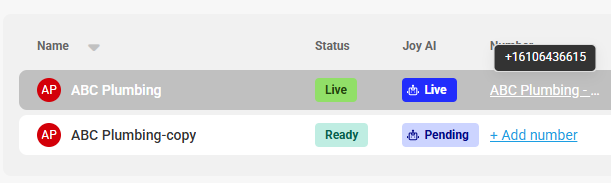
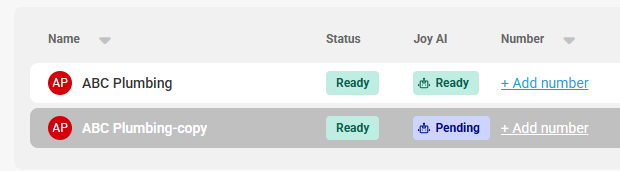
On the original script, select the Number Alias under the Number column.
2
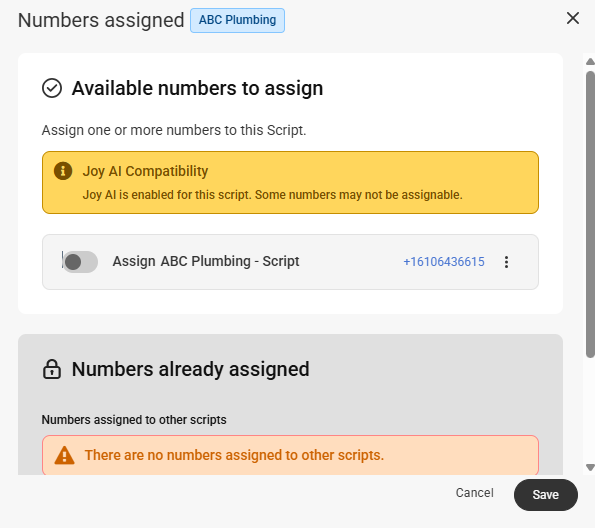
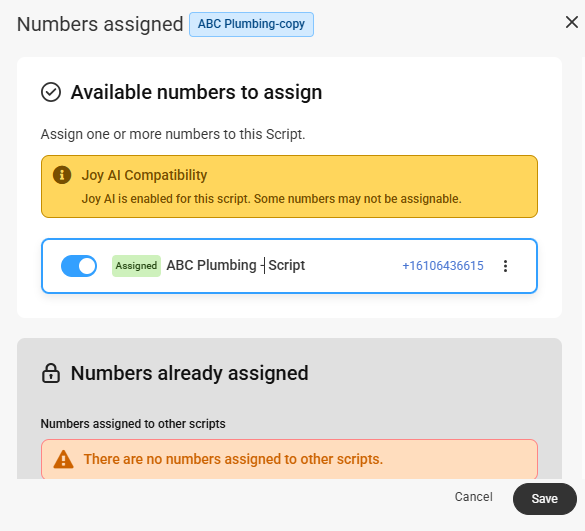
In the Numbers pop-up window, use the toggle to un-select the number assignment from this script. Then click Save.
3
Next, select the Number Alias under the Number column for the new script, and use the toggle to assign the SAS number to the new script. Then click Save.
4
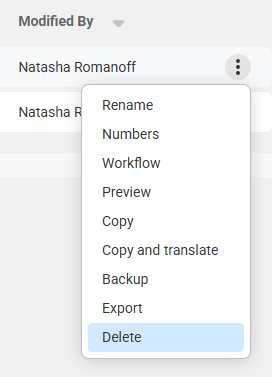
Now that the new script is live, we can delete the old script. Click the 3-dot menu icon next to the old script, and click Delete.
Note that deleted scripts will be Archived and can be restored at any time.
5
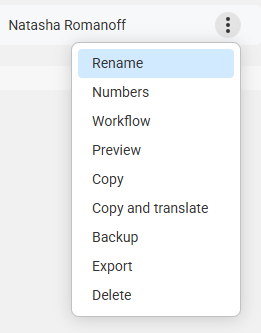
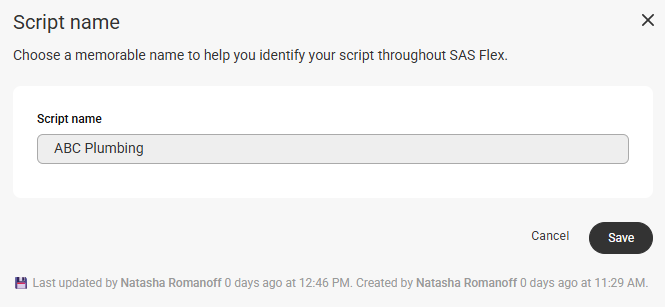
Finally, let's edit the name of our new script to remove the "copy" label. Next to the new script, click the 3-dot menu icon and select Rename. In the pop-up window, edit the name to remove the "copy" label. Then click Save.
Note that if Joy AI was enabled on the original script, it will have to be re-enabled on the new one.

